Newsletter Spiegel (EN)
Magic mirror on the wall – who’s the fairest one of all?
Hardly any sentence is as well-known as this question from the fairy tale. Yet the mirror is far more than an object that reflects our outward appearance. For centuries, it has fascinated artists as a symbol of beauty, identity and the quest for one’s true self.
Even in antiquity, the mirror appeared in myths and depictions of deities, symbolising insight and self-reflection. Throughout art history, it has taken on ever-changing meanings: it can embody truth and reality just as much as deception, illusion and the limits of our perception. In vanitas and nude depictions, it also serves as a reminder of the transience of life and of how fleeting beauty and youth are. Which interpretation takes centre stage depends on the respective era, the cultural context and the artist’s individual style.
The role of the mirror underwent a fundamental shift, particularly in the modern era. The ‘mirror on the wall’ has long since ceased to be a reliable source of truth. Instead, the mirror has become a symbol of subjective perception – of inner moods, personal experiences and the search for one’s own identity. The focus is no longer on objective reality, but on the question of self-perception and identity.
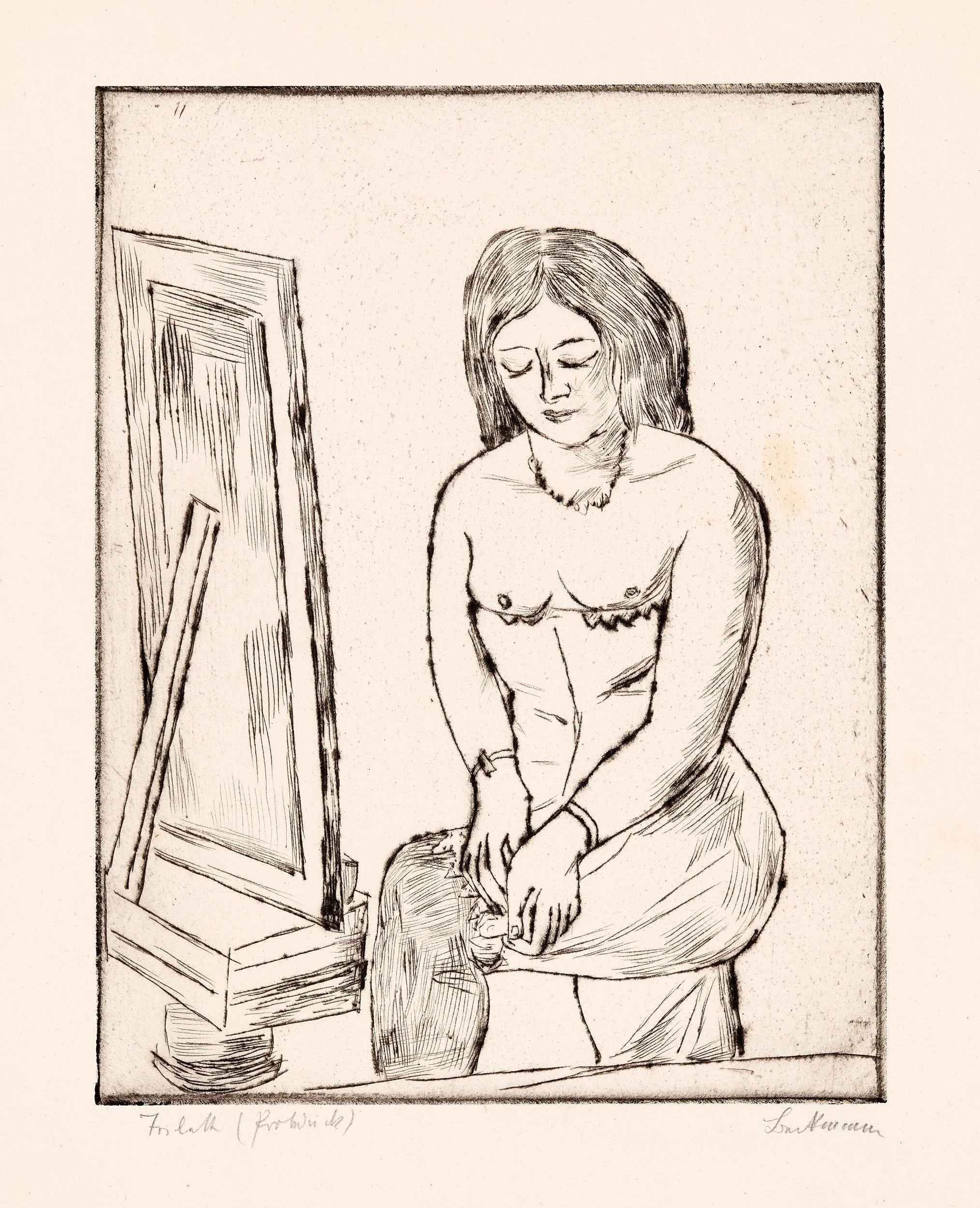
Max Beckmann
TOILETTE (VOR DEM SPIEGEL)
Drypoint. 1923.
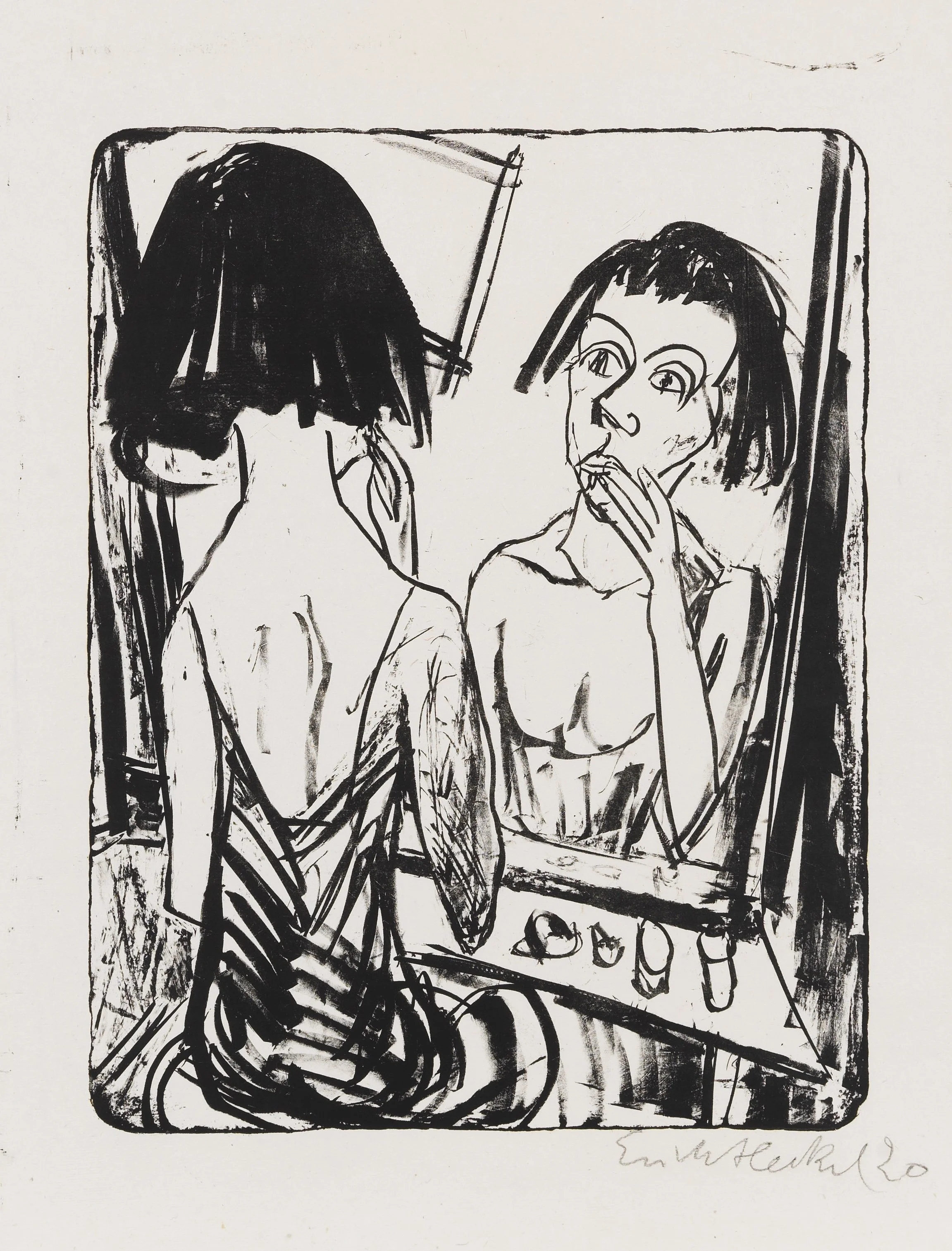
Erich Heckel
VORM SPIEGEL (A.N. VORM SPIEGEL)
Lithograph. 1920.
In Toilette, for example, Max Beckmann depicts a scene that lies somewhere between staged performance and intimacy, whilst Erich Heckel captures a quiet moment of self-reflection in Vor dem Spiegel.
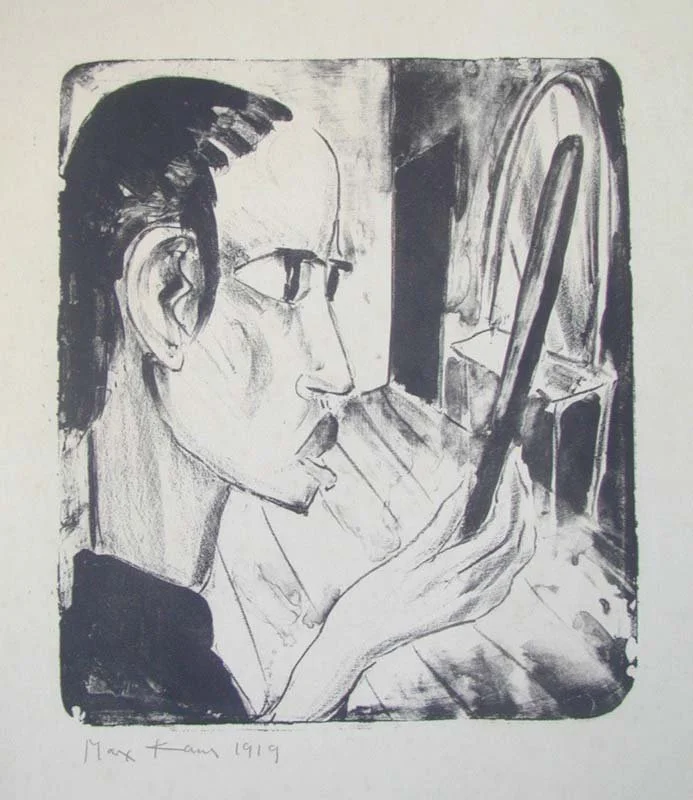
Max Kaus
ENTSETZEN VOR DEM SPIEGEL
Lithograph. 1919.
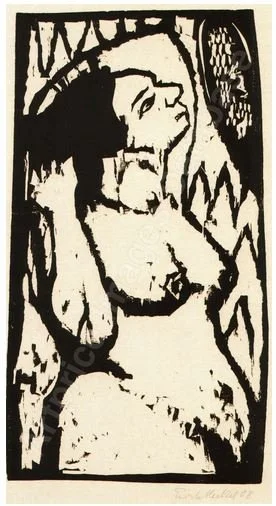
Erich Heckel
FRAU AM SPIEGEL (VORM SPIEGEL/AM SPIEGEL/STEHENDER AKT/NACKTE FRAU)
Woodcut. 1908.
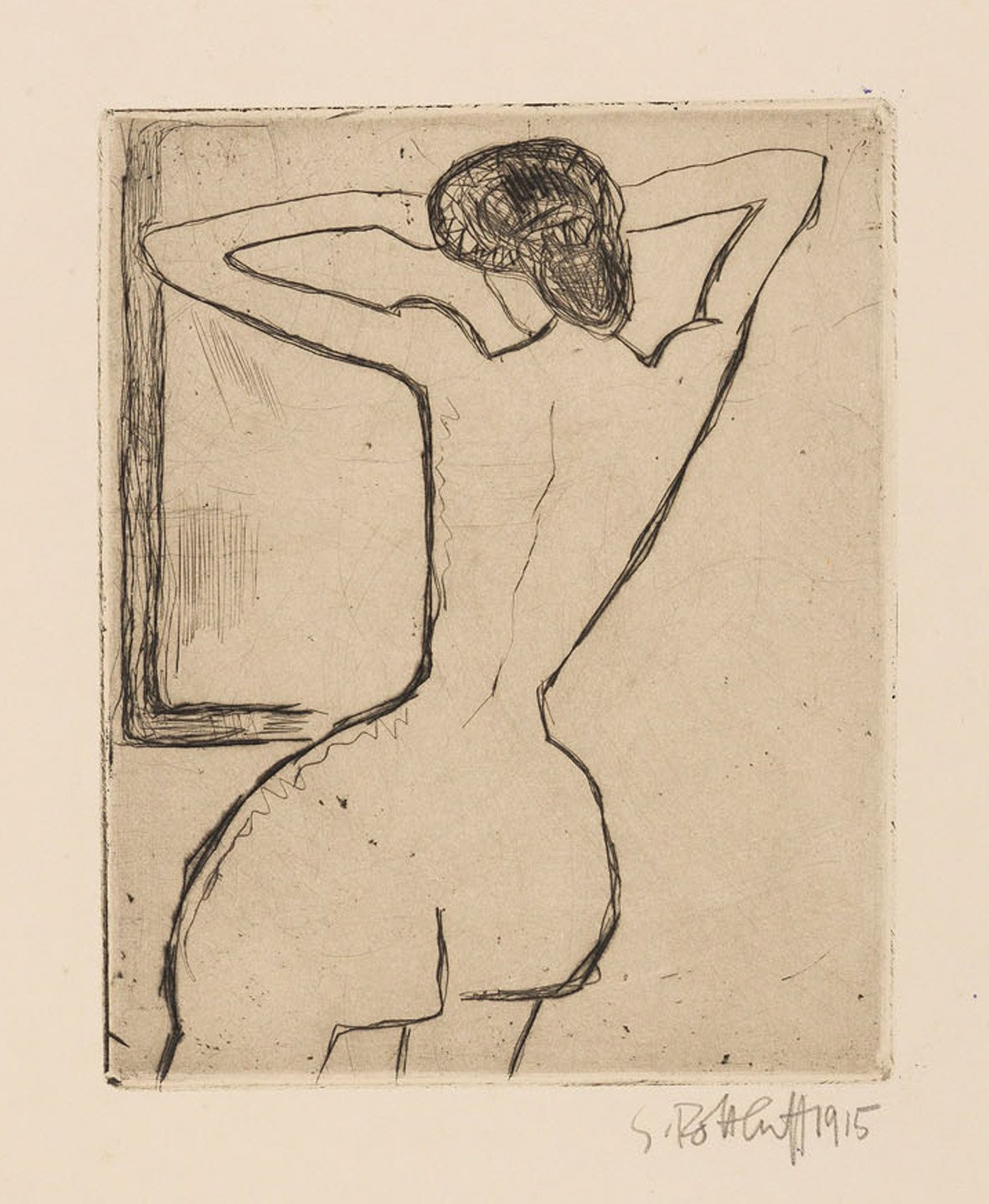
Karl Schmidt-Rottluff
MÄDCHEN VOR DEM SPIEGEL
Drypoint. 1915.
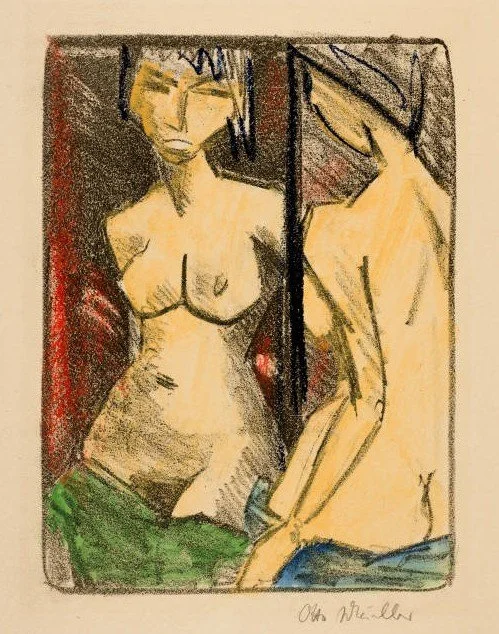
Otto Mueller
MÄDCHENAKT VOR DEM SPIEGEL (HALBAKT)
Lithograph and watercolor in blue, green and yellow, overdrawn with colored chalk in violet and red. 1924.
In Entsetzen vor dem Spiegel ('Horror Before the Mirror'), Max Kaus even makes the mirror the catalyst for inner turmoil and existential questions. In contrast, Otto Mueller, in Mädchenakt vor dem Spiegel ('Nude Girl Before the Mirror'), and Karl Schmidt-Rottluff, in Mädchen vor dem Spiegel ('Girl Before the Mirror'), explore physicality, intimacy and self-perception through expressive visual language.
The selected works impressively demonstrate the many facets in which the mirror is employed as an artistic motif in Expressionism. It is far more than merely an object of depiction: as a medium of reflection, self-awareness and uncertainty, it reveals the interplay between outward appearance and inner reality, thereby becoming a symbol of human identity and existence.