Newsletter Special Grosz (EN)
Happy Birthday, George Grosz – 133 years of biting satire and vibrant art!
A festive atmosphere, a glass of wine and a little dance to celebrate the anniversary of one of the most brilliant minds in 20th-century German art and satire: born on July 26, 1893, in Berlin, Grosz used his unflinching gaze on society, politics, and the absurdities of everyday life to sound warnings that continue to resonate today.
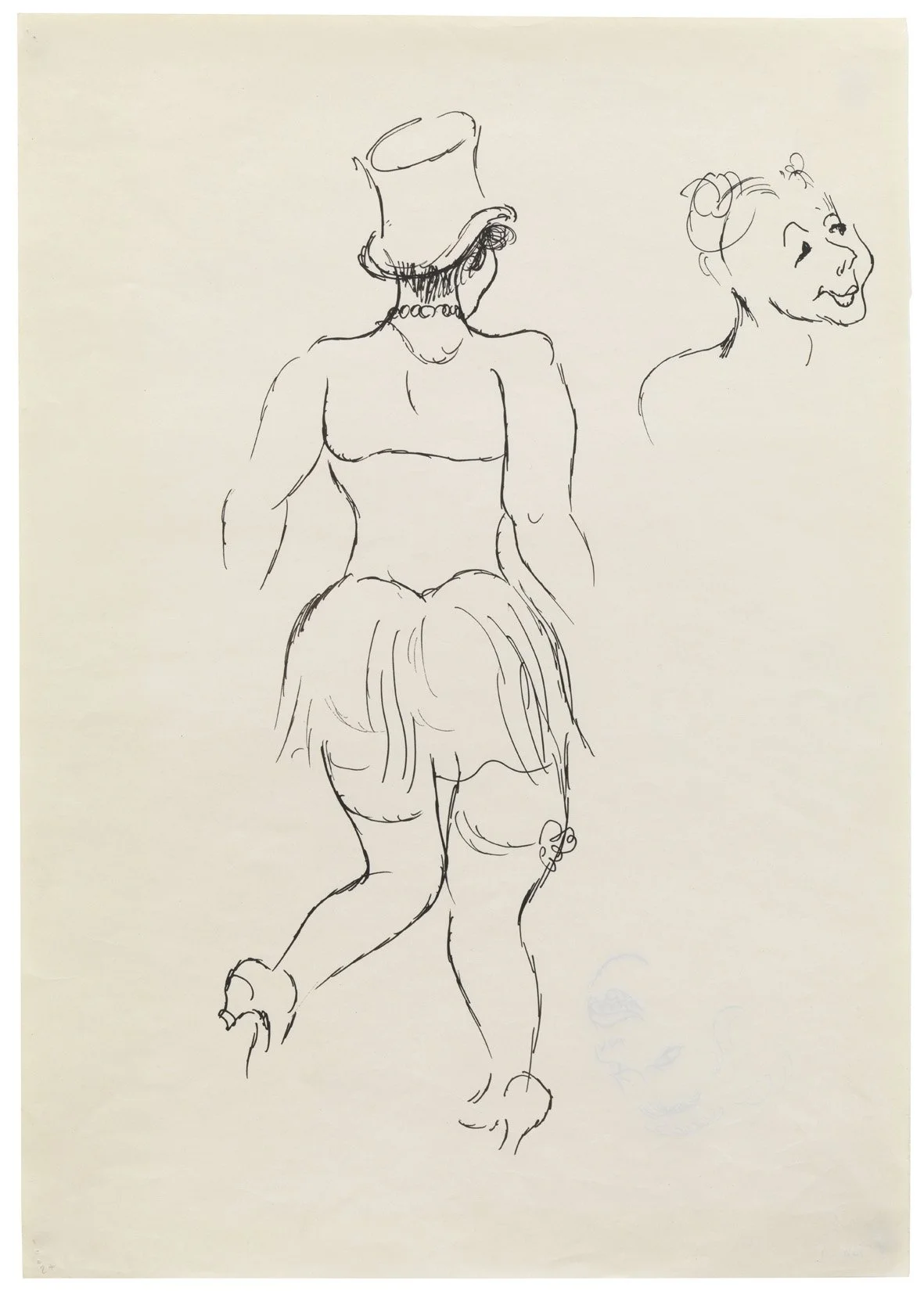
George Grosz
TANZENDE
Reed pen, pen and ink drawing. 1926.
Dancing on a vulcano
The theme of DANCE in George Grosz’s work is closely linked to the spirit of the Weimar Republic and the notion of 'dancing on a volcano'. As a “dandy,” Grosz loved fashionable dances like the shimmy, but in his art, dance rarely served purely aesthetic purposes: he used it as a political and satirical motif to critique the alienated, mechanized, and excessive life of the big city.
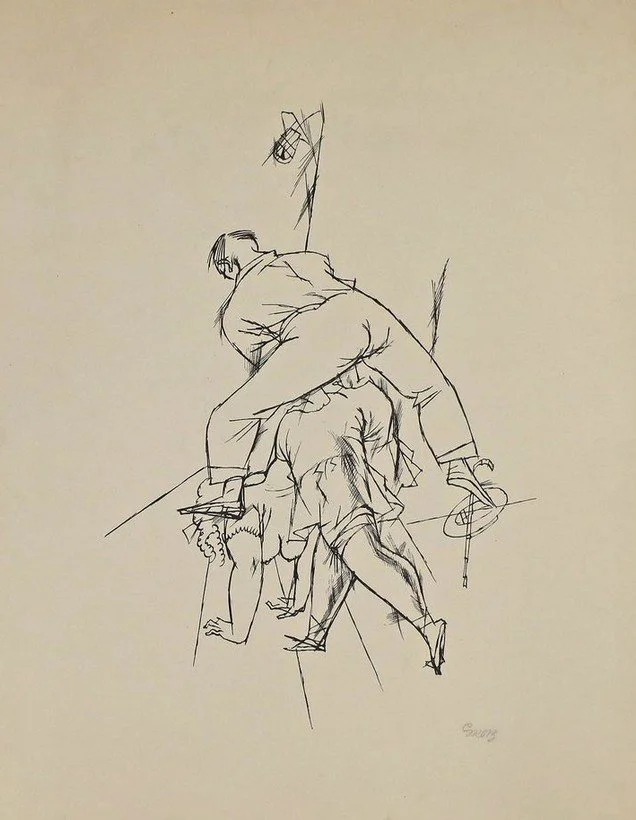
GROTESKER TANZ
Photo lithograph. 1915.
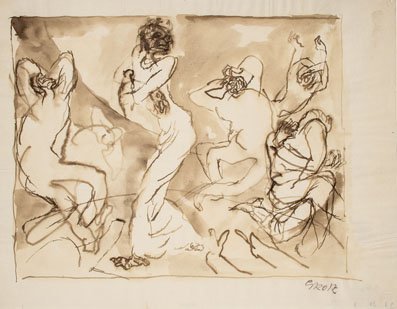
GROTESKER TANZ
Pen and ink drawing. 1913.
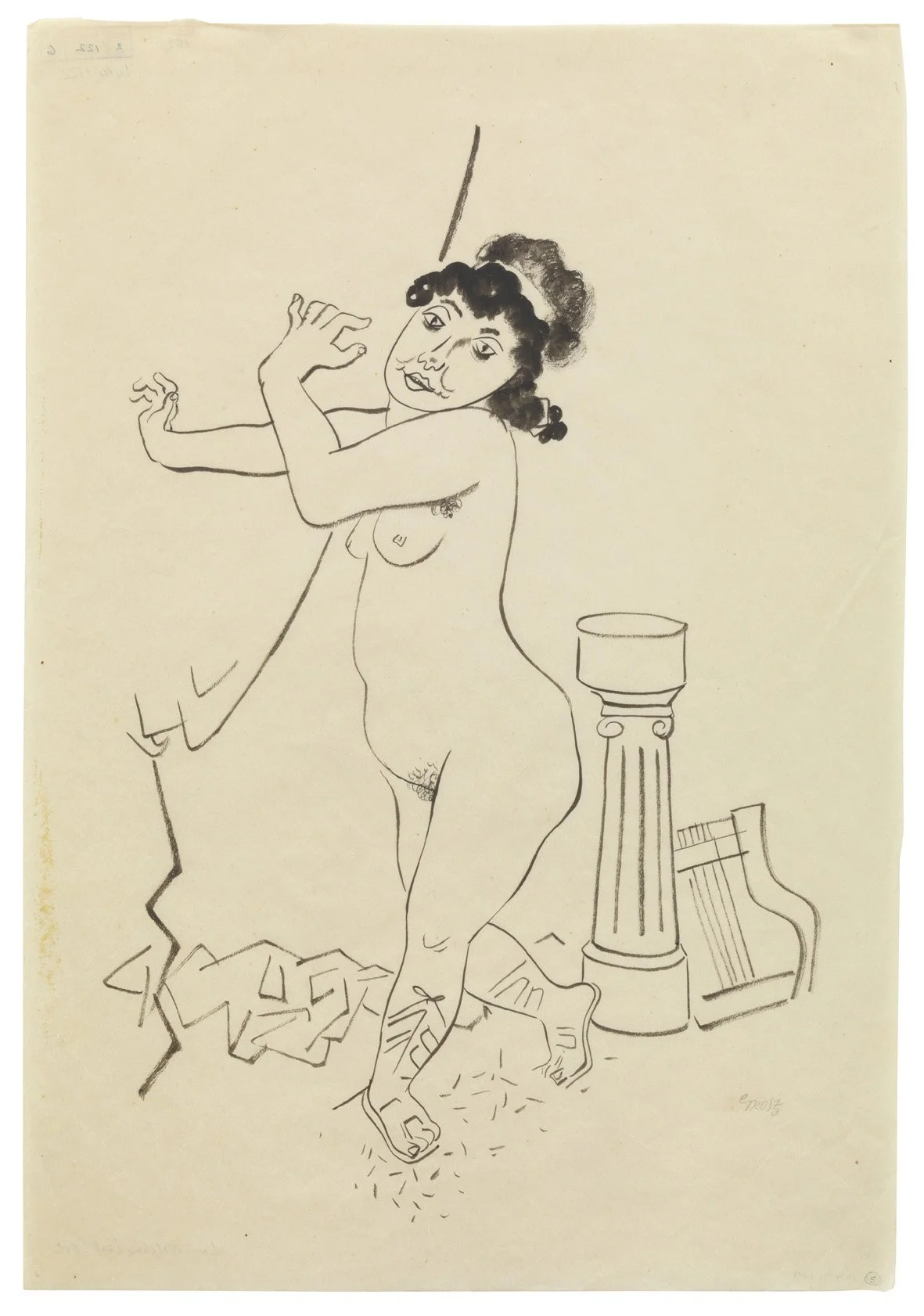
LADY HAMILTON
Brush, reed pen, pen and ink drawing. 1922.
A metaphor for excess: In his works from the 1920s, Grosz often depicts dance as a feverish frenzy. The scenes in bars and vaudeville theaters reflect a decadent society that sought to numb itself to the horrors of World War I and political crises through superficial pleasures. Likewise, cafés and alcohol consumption are central motifs of metropolitan life. In Grosz’s works, they do not serve a romantic purpose, but rather function as socially critical mirrors of the Weimar Republic, where places of entertainment were often sites of escape, isolation, and excessive intoxication for people.
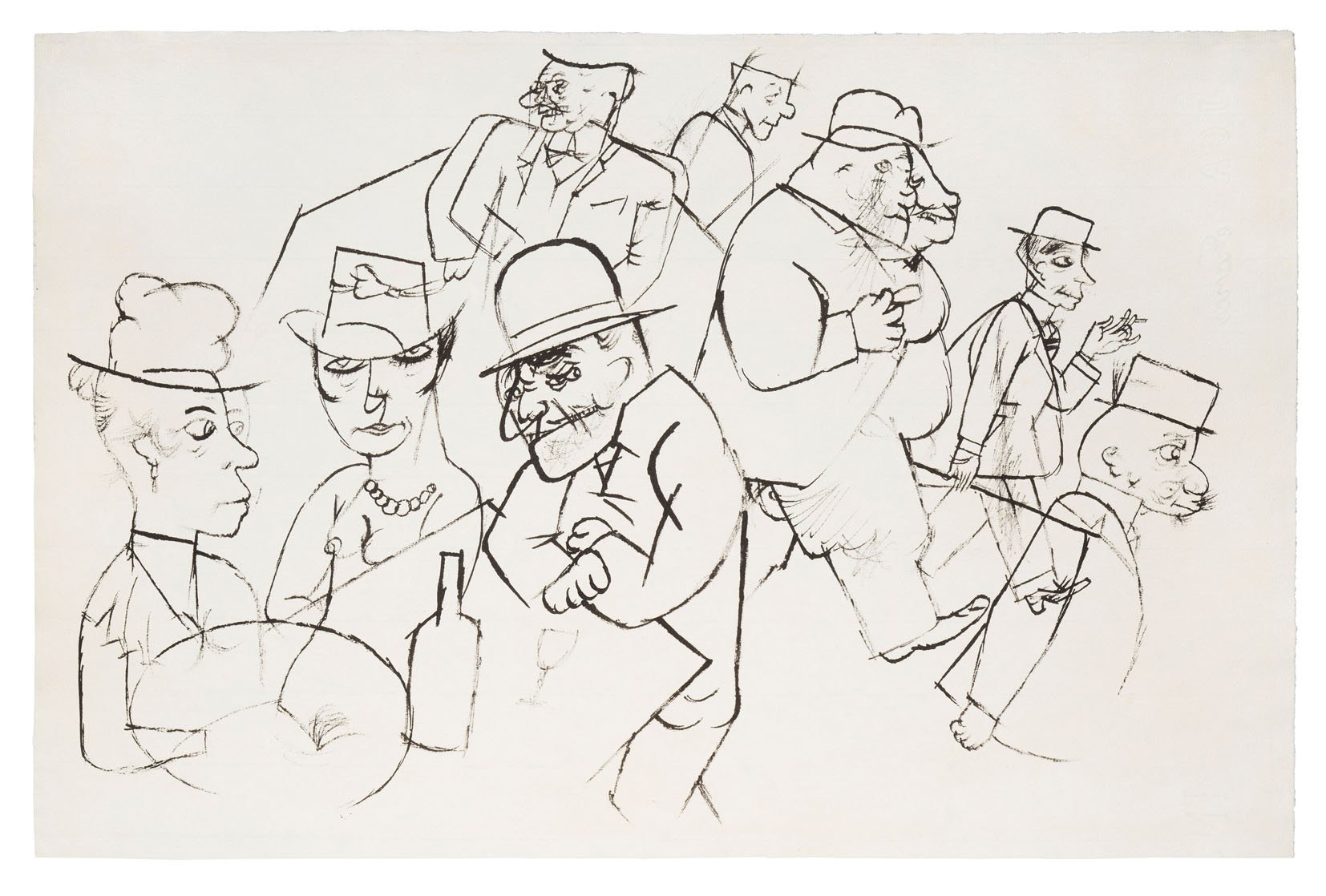
SCHÖNHEITSABEND IN DER MOTZSTRASSE
Pen and ink drawing. 1918.
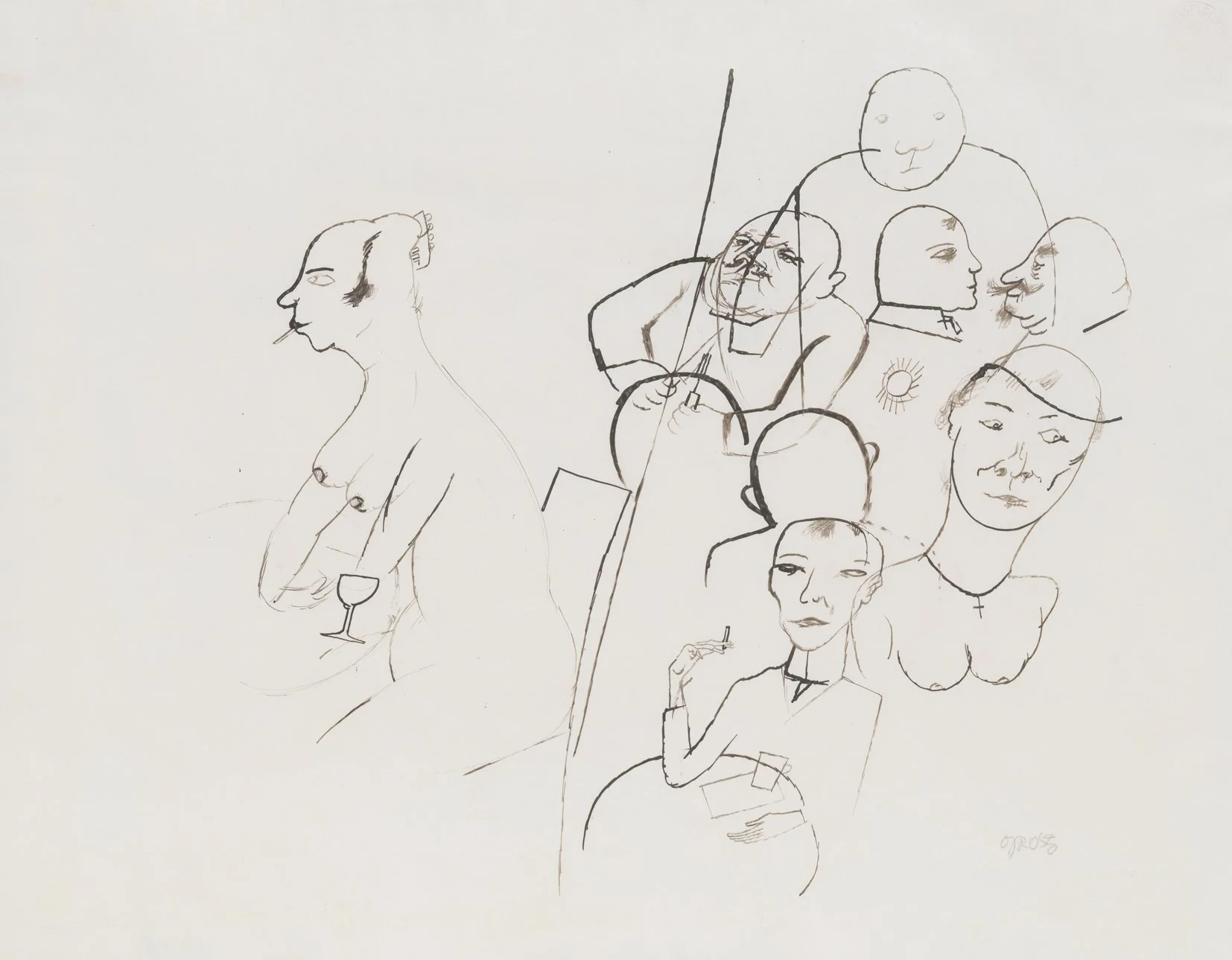
KAFFEEHAUSSZENE,
AN EVA, MEINE FREUNDIN
Reed pen. 1918.