Newsletter Sommer (EN)
Summer pictures – between sunshine and longing
Before the last warm rays of sunshine disappear and give way to rainy autumn weather, here is a little tribute to the past few months. This collection brings together photographic and graphic works that invite you to revel once more in the nostalgia of a summer holiday.
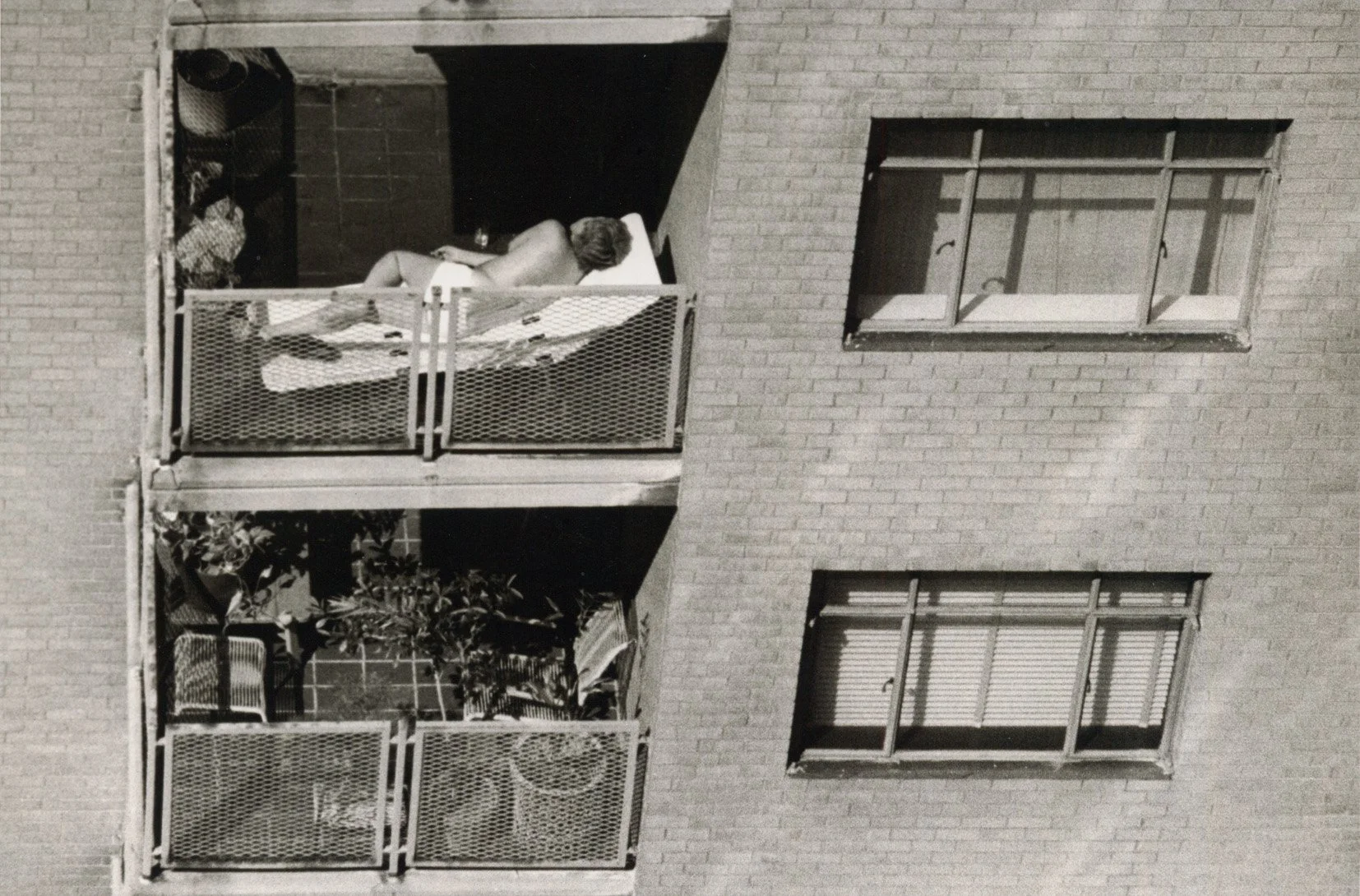
André Kertész
UNTITLED (BALCONIES, NEW YORK CITY)
Gelatin silver print. 1977.
For many people, the sea is an essential part of that true summer feeling – letting your gaze wander to the horizon and feeling the sand beneath your feet. Harry Callahan’s ‘Cape Cod’ captures precisely this special moment: the endless play of the waves, the vastness of the ocean and the tranquillity of a deserted beach.
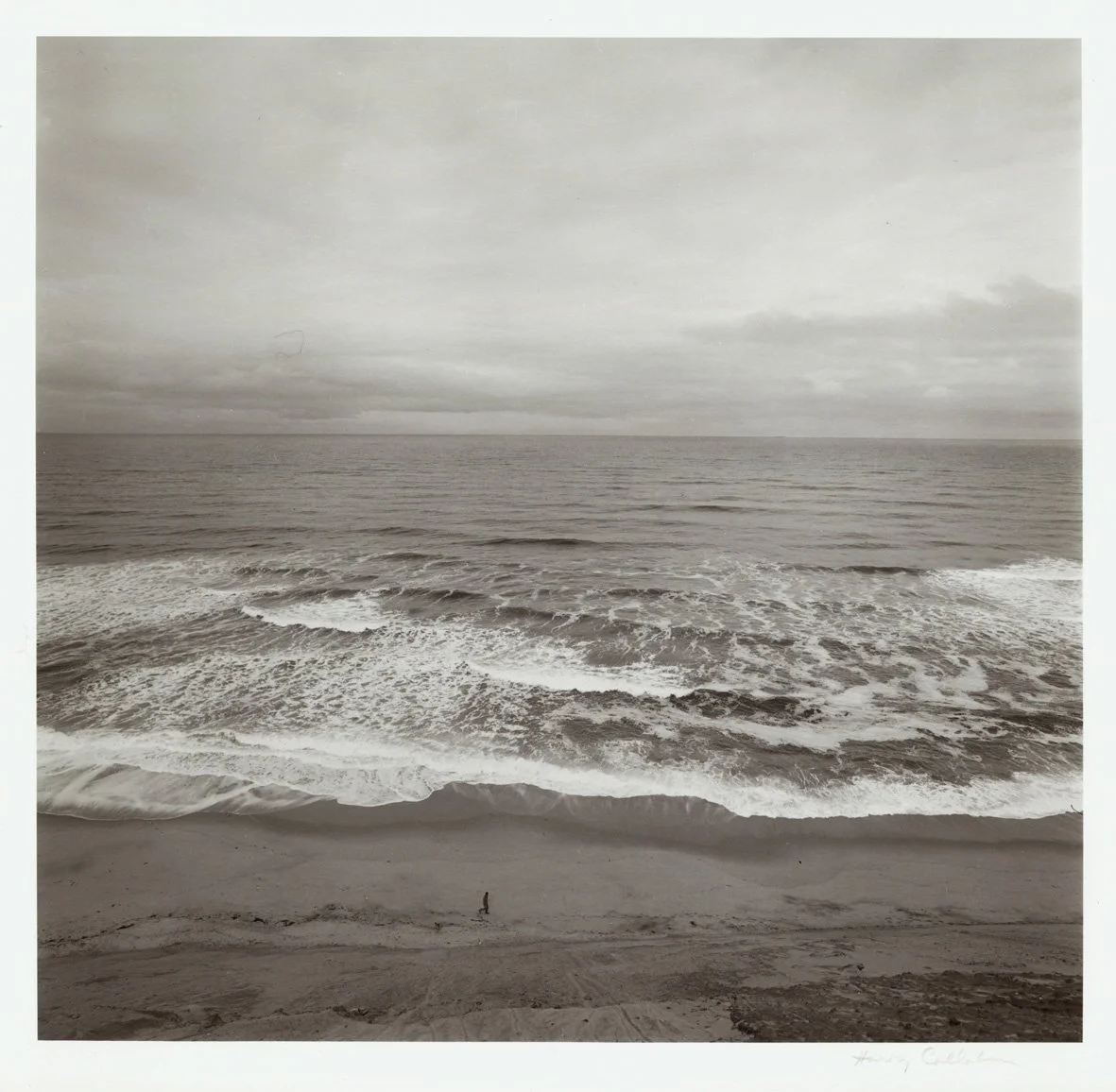
Harry Callahan
CAPE COD
Gelatin silver print. 1974.
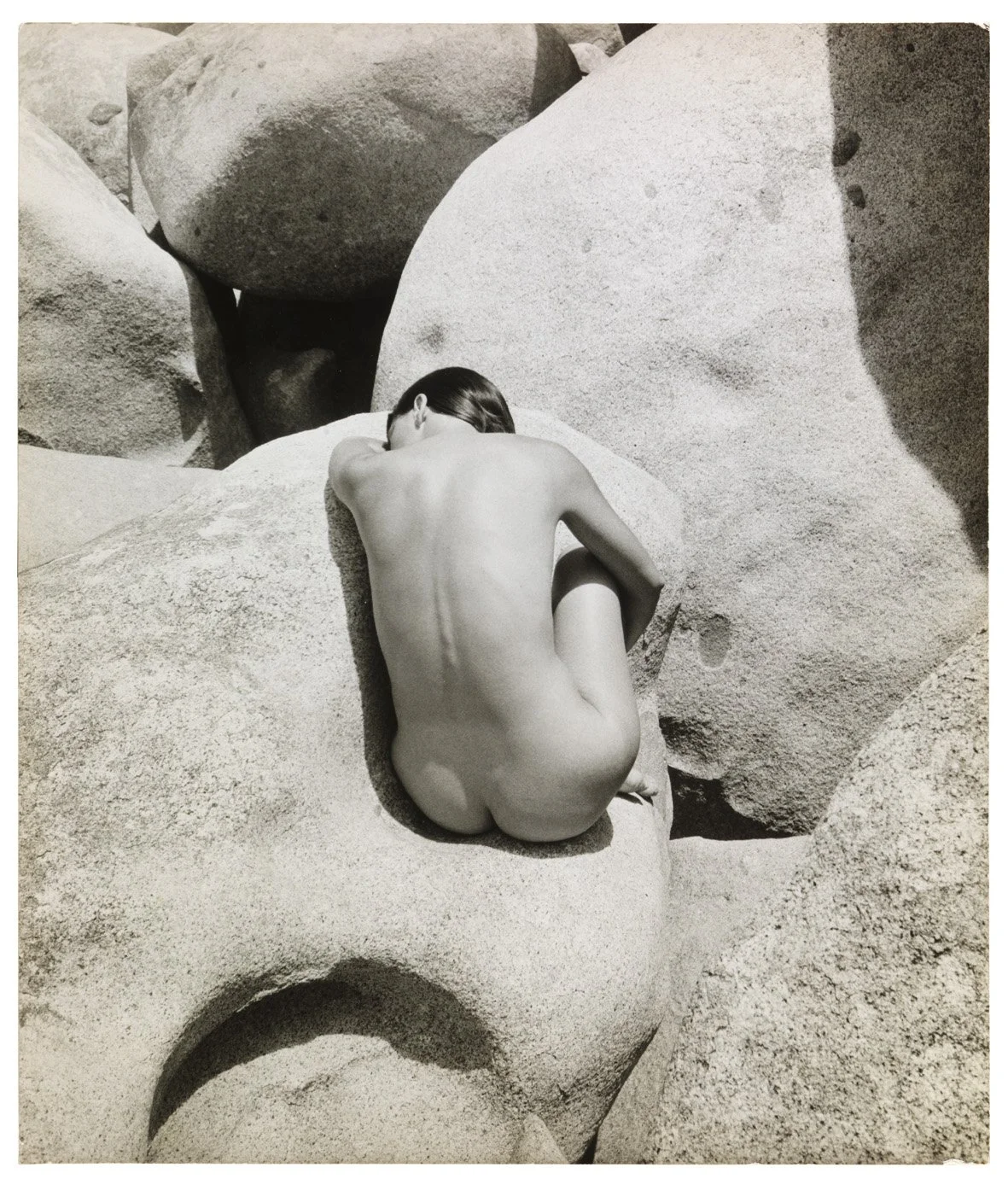
Fritz Henle
NUDE ON BASALT ROCKS, VIRGIN GORDA
Gelatin silver print. 1953.
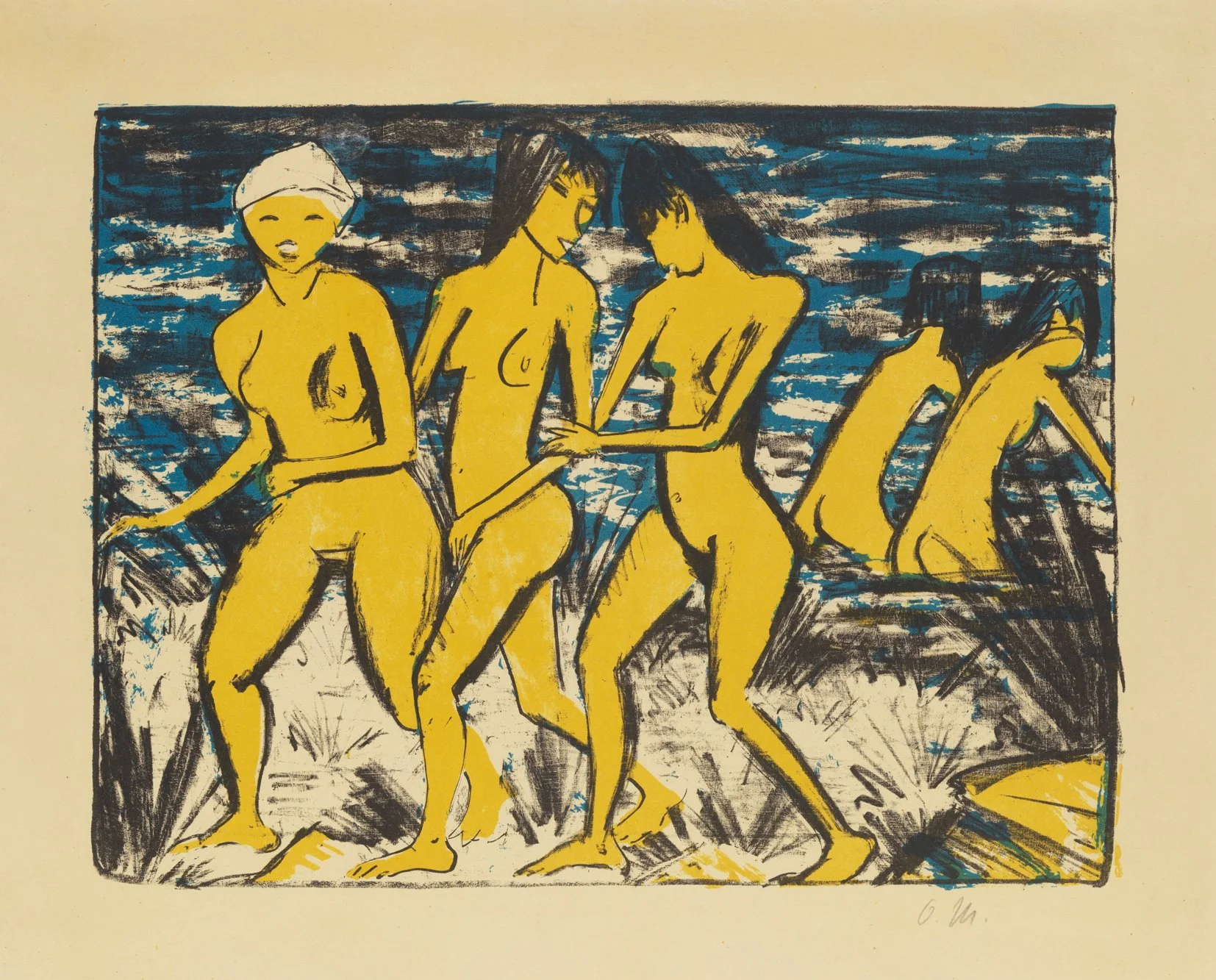
Otto Mueller
FÜNF GELBE AKTE AM WASSER
Color lithograph. 1921.
Ever since his stay on Fehmarn in 1908, Otto Mueller has repeatedly explored the motif of bathers by the water. Later summer trips also took him to the North Sea and the Baltic Sea. His paintings are less about the precise depiction of a specific place than about the idea of a simple, unpretentious life in harmony with nature. The bathers move naturally within their surroundings – amongst the beach, the water, the dunes and the vegetation – and come to symbolise freedom and a connection with nature.
Max Beckmann’s love of the sea was such that he longed to spend two months a year alone on the beach. He travelled to the North Sea and the Baltic Sea, to the Riviera, and finally, at the age of 66, gazed in fascination at the Pacific Ocean for the first time. This inspired numerous studies in which the sea was a recurring subject – yet in his graphic work, the subject appeared comparatively rarely.
This makes the drypoint 'Beach' from 1922 all the more interesting. Contrary to initial assumptions that it depicts a Mediterranean landscape, it can be assumed that it is, in fact, a North Sea beach. Probably created during a stay by the Beckmanns on the North Sea coast, the work conveys an immediate impression of the landscape that fascinated the artist throughout his life and which still attracts many tourists today.
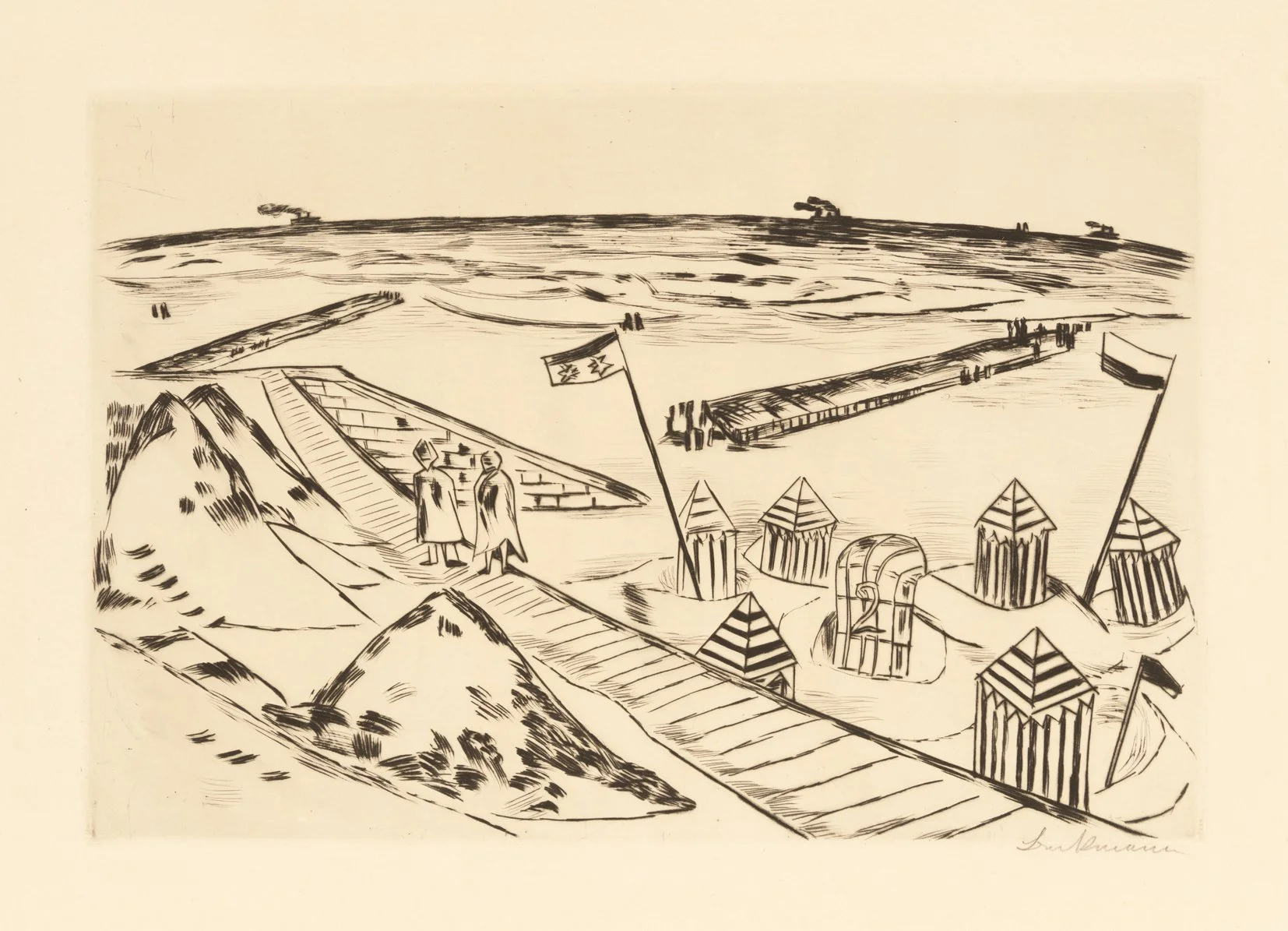
Max Beckmann
STRAND
Drypoint. 1922.
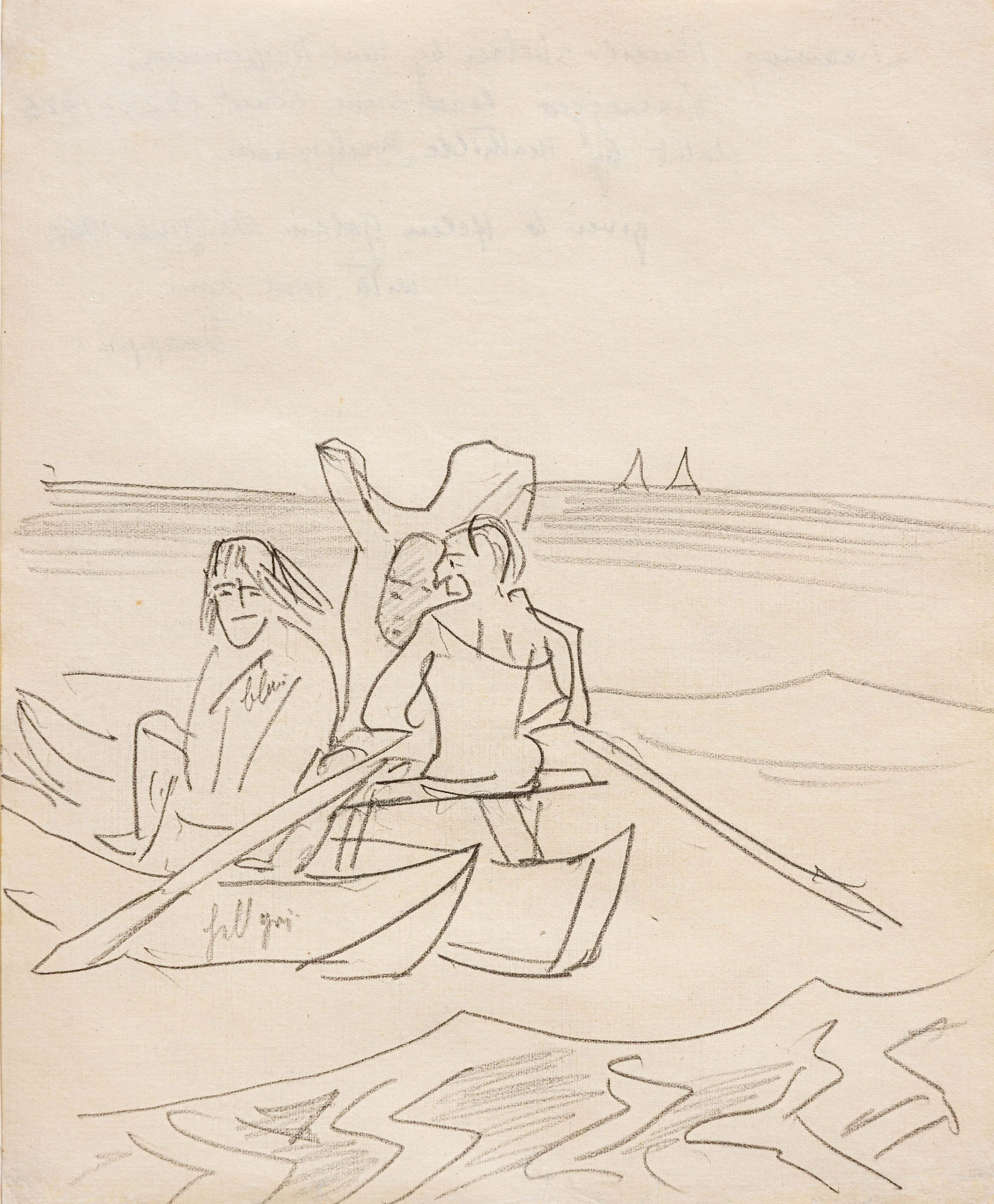
Max Beckmann
FIGUREN IN EINEM RUDERBOOT AM STRAND
Pencil drawing. 1925/26.
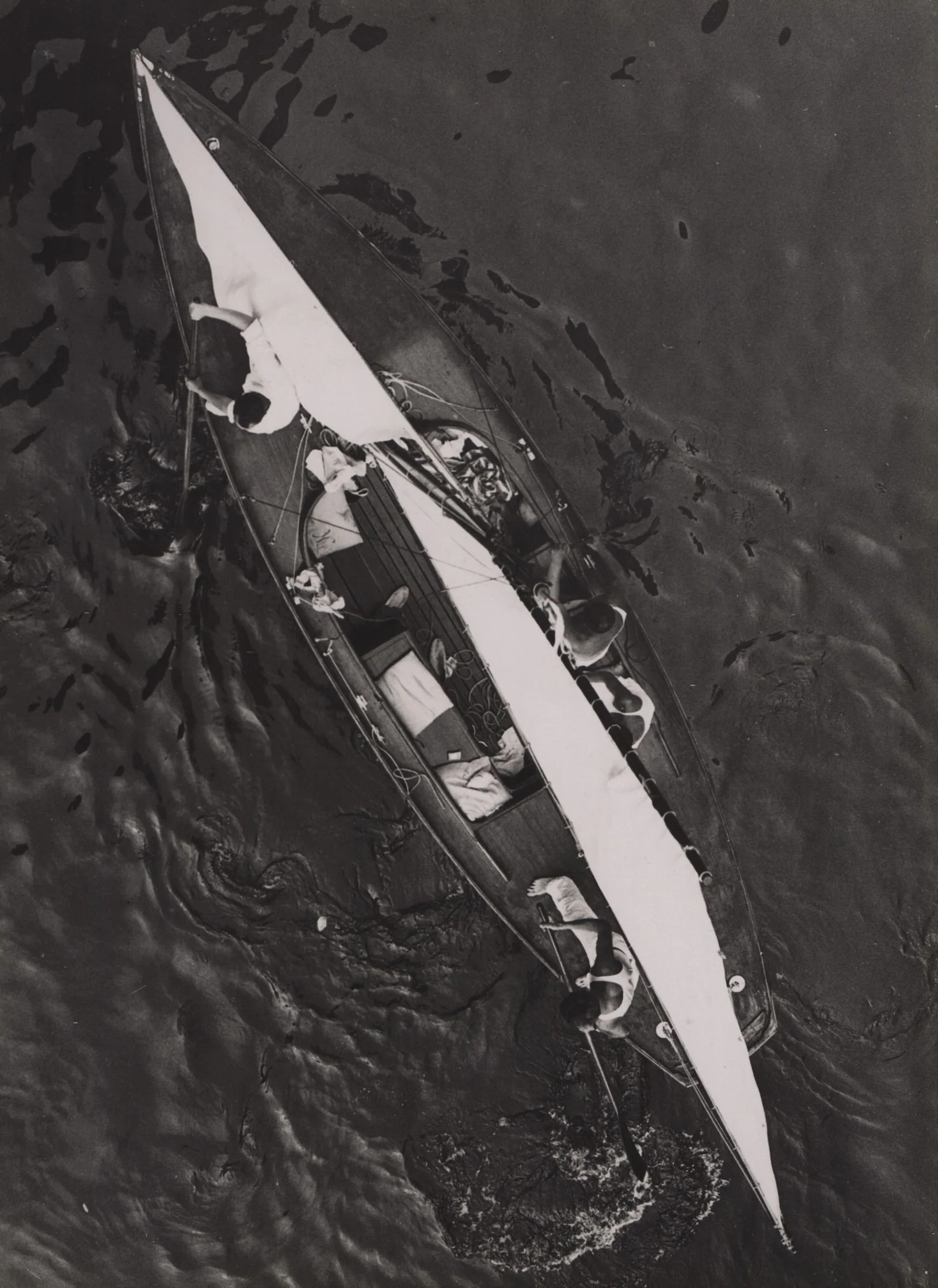
Alex Stöcker
BOATING STUDY
Gelatin silver print. 1930s.
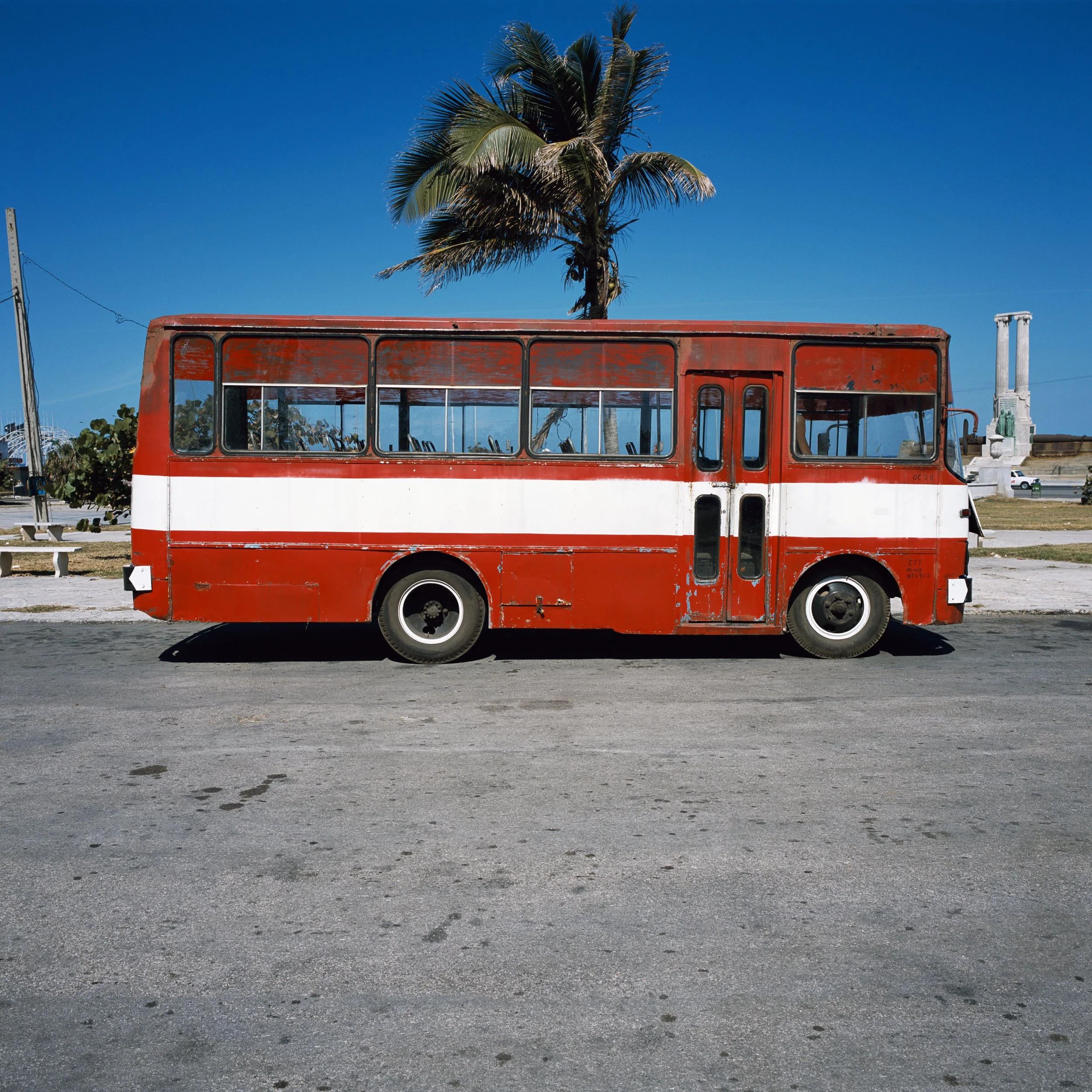
Charles Johnstone
RED BUS
C-Print. 2006.
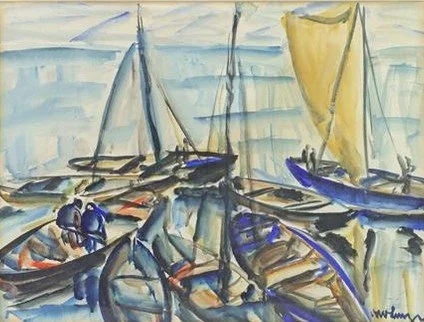
Otto Lange
SCHIFFE BEI SCHULITZ AN DER WEICHSEL
Watercolor. 1916.
Boats are among the most traditional motifs in art, as they are always more than mere means of transport: they symbolise new beginnings, journeys and the overcoming of boundaries. Situated between the landscape and the open water, they mark a transition – from the familiar to the unknown, from dry land to the open sea.
Yet the coach, too, is a symbol of being on the move: it connects places, opens up new perspectives and turns the journey itself into an experience. In Charly Johnstone’s 'Red Bus', the coach becomes the embodiment of that nostalgic notion of travel associated with summery light-heartedness, unfamiliar roads and the anticipation of the unknown.